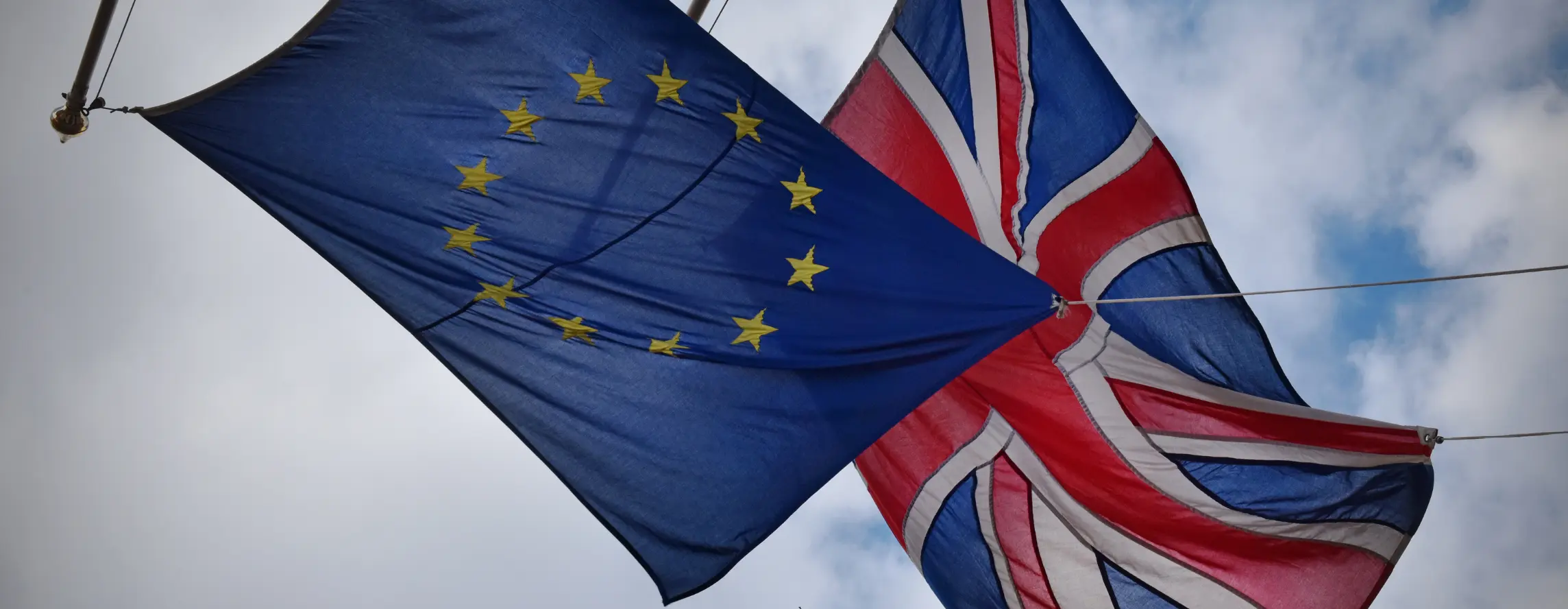
The UK and European Union have reached new agreements aimed at reducing trade barriers, strengthening economic cooperation and creating new opportunities for businesses following the UK–EU Summit in Brussels on 20 November 2026.
The agreements focus on three key areas: food and agricultural trade, emissions trading and opportunities for young people to live and work across the UK and EU.
For UK businesses trading with Europe, these developments could mean reduced administrative costs, simpler border procedures, more predictable supply chains and greater opportunities for international growth.
However, the agreements have not yet taken effect. Further legal and implementation processes are required before businesses can benefit from the new arrangements.
- Simplifying food and agricultural trade
One of the most significant developments is the new Sanitary and Phytosanitary (SPS) Agreement, covering food, agricultural products, animals and plants.
The agreement aims to remove many existing certification requirements and routine border checks for qualifying goods moving between Great Britain and the EU.
Expected benefits include:
- Less paperwork: Removing Export Health Certificates and phytosanitary certificates for most covered movements.
- Fewer border checks: Reducing routine inspections on products including meat, dairy, fish and plants.
- Improved market access: Reopening opportunities to export certain products, including fresh sausages, burgers and seed potatoes.
- Simpler GB–Northern Ireland movements: Reducing certain administrative requirements through the interaction with the Windsor Framework.
The UK Government estimates that the agreement could increase economic output by up to £5.1 billion annually by 2040.
Planned implementation date: 1 March 2028, subject to the necessary legal processes.
The agreement involves ongoing alignment with relevant EU regulations. It does not remove customs declarations or existing preferential rules of origin requirements.
- Linking UK and EU emissions trading systems
The second major agreement concerns linking the UK Emissions Trading Scheme (UK ETS) with the EU Emissions Trading System (EU ETS).
These schemes place a price on greenhouse gas emissions, with participating businesses required to account for their emissions through allowances.
Linking the systems is intended to enable emissions allowances to be recognised across both markets, while reducing duplication for businesses operating in the UK and EU.
The agreement is also expected to provide exemptions from the respective Carbon Border Adjustment Mechanisms (CBAM), subject to the necessary legislation and procedures.
This could particularly benefit manufacturers and exporters in carbon-intensive sectors, including steel and aluminium, by reducing additional carbon-related trading costs and administrative requirements.
The UK Government estimates that approximately £6.5 billion worth of UK exports could benefit from exemption from the EU CBAM.
Target implementation date: 1 January 2028.
Businesses should note that the UK’s CBAM is scheduled to begin on 1 January 2027. Existing and upcoming obligations must continue to be considered until any applicable exemptions take effect.
- New opportunities through a Youth Experience Scheme
The UK and EU have also concluded negotiations on a new Youth Experience Scheme.
The scheme will allow up to 100,000 eligible UK citizens and 100,000 EU citizens annually to live in each other’s territories for up to three years.
Participants aged 18 to 31 will be able to undertake activities including employment, education, volunteering and travel, subject to the scheme’s conditions.
For businesses, this could create additional opportunities to recruit internationally, develop employees’ overseas experience and support cross-border collaboration.
The first opportunities are expected to be available no later than January 2030.
- Wider UK–EU cooperation
The summit also included commitments to strengthen cooperation on economic security, supply chains, digital technology and energy.
Further negotiations are expected on potential UK participation in the EU’s internal electricity market, while discussions on the treatment of UK businesses under proposed EU industrial measures, including the Made in Europe initiative, remain important for manufacturers and supply chains.
Negotiations concerning university tuition-fee arrangements also remain outstanding, with both sides aiming to reach an agreement within six months.
These areas could have further implications for UK businesses, although additional negotiations and implementation measures will be required.
What do these agreements mean for your business?
The UK–EU agreements could provide meaningful commercial benefits for businesses importing from, exporting to or operating across European markets.
Although implementation remains some way off, the agreements offer a clearer indication of where trading conditions may become simpler and where businesses could gain a competitive advantage.
Lower costs and less paperwork for food and agricultural businesses
For businesses importing or exporting food, plants and agricultural products, the SPS agreement could significantly reduce the administrative burden associated with EU trade.
Removing many routine certificates and physical inspections could mean fewer documentation costs, reduced border delays and more predictable delivery times.
This could be particularly valuable for businesses transporting perishable goods, where delays can affect product quality, shelf life and profitability.
Improved competitiveness for manufacturers and exporters
Linking the UK and EU emissions trading systems could reduce additional costs and administrative requirements associated with trading carbon-intensive products across borders.
For businesses operating in sectors such as steel and aluminium, the proposed CBAM exemptions could help protect export competitiveness and provide greater certainty when planning future contracts, pricing and supply chains.
However, any benefit will depend on the final implementation arrangements.
More predictable supply chains and cross-border operations
Businesses that rely on regular UK–EU movements of covered food and agricultural goods could benefit from more consistent border procedures.
Fewer routine SPS checks could improve delivery reliability, reduce disruption and support more efficient stock management.
For importers, exporters and logistics providers, this could create opportunities to review transport arrangements and improve supply-chain efficiency.
Importantly, the agreements do not remove the general requirement for customs declarations or compliance with applicable rules of origin.
New opportunities for recruitment and international experience
The Youth Experience Scheme could create additional opportunities for businesses to access international talent and offer eligible younger employees experience working in European markets.
For organisations with UK and EU operations, this may support recruitment, professional development and cross-border collaboration, subject to the scheme’s final conditions.
What happens next?
The agreements represent a significant development in UK–EU trade relations, but their benefits will not be immediate.
Businesses must continue following existing customs and regulatory requirements while the agreements progress through the necessary implementation processes.
For companies trading regularly with the EU, the longer-term opportunity is the potential to reduce trading friction, improve operational efficiency and strengthen commercial relationships across European markets.
The British Chambers of Commerce has welcomed the summit’s outcomes, highlighting the potential for reduced costs, less paperwork and new employment opportunities, while emphasising the importance of delivering the agreements within the planned timescales.
How Thames Valley Chamber of Commerce can help
Whether your business is already trading with the EU or exploring new opportunities in European markets, understanding your customs and regulatory responsibilities remains essential.
Our International Trade team can help you understand your current trading obligations and consider how future changes may affect your business operations.
Contact our International Trade team:
Email: trade@tvchamber.co.uk
Sources and further information