
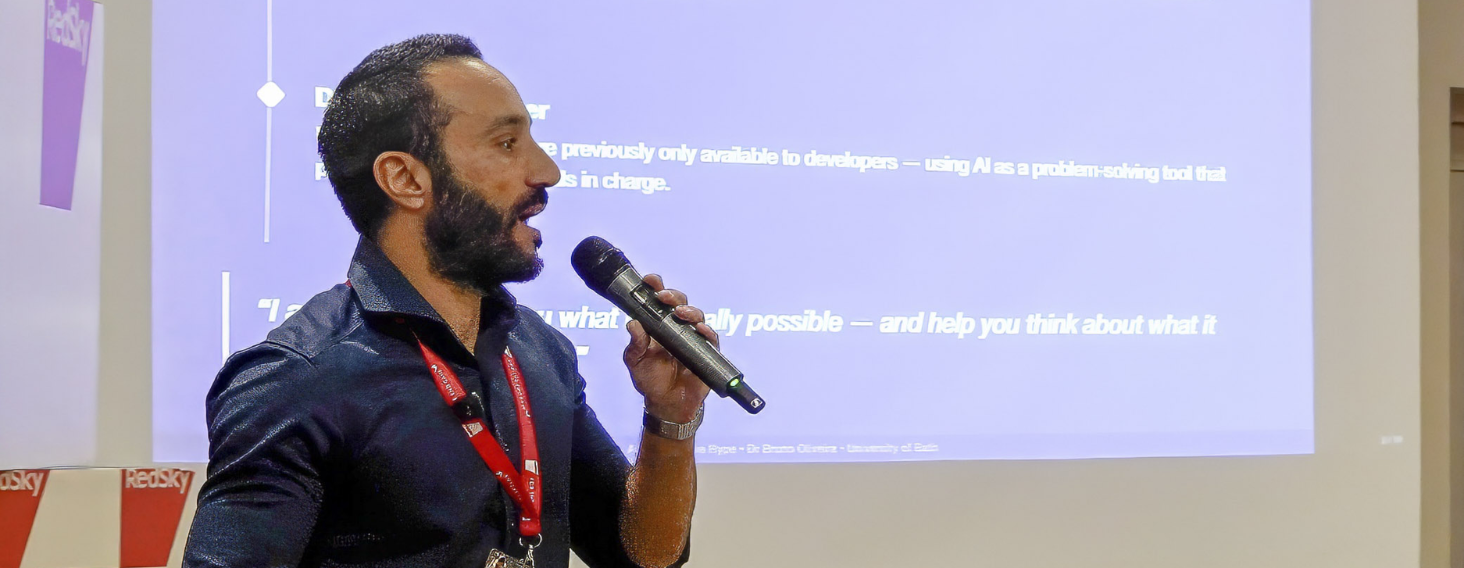
Dr Bruno Oliveira, Senior Lecturer in Strategy and Entrepreneurship, University of Bath School of Management
Once a business decides to take AI seriously, someone usually gets handed the task. Often it goes to the IT provider. Sometimes it lands with whoever in the team has been using it most, or with a supplier who gave a good demonstration. For most technology that is exactly the right call. Knowing when to bring in good support is part of running a business well – not everyone in the business needs to know the details of the payroll app.
AI is a little different, and it is worth being clear about why. The work can be shared, and it should be. What is much harder to hand over is the judgement about that work. That judgement comes far more easily once you have used the tools on something real yourself, and it is what allows you to define what ‘good support’ looks like, and whether that support is living up to those expectations.
Why AI is different
With payroll, the job is known in advance and the decision is mostly about which product does it best. With AI, the decisions that matter sit inside the work itself. Which tasks should it be trusted with? What does good output look like in this business, and who checks it before it goes anywhere? What information is allowed to go in? These are judgements about how the business runs, so they belong with the people who run it.
These decisions are hard to make second-hand. What the leading AI models can do has moved a long way in the last few months, and a view formed on a free version, or on a demonstration from last year, may no longer hold.
When nobody at the top has used it
An enthusiast in the team will often find good uses for a tool, but it is hard for anyone else to tell which of them are worth developing, so that person remains the main contact. An IT provider will rightly look at licences and security first. The question of which work AI should actually be doing can then sit unanswered, because it was never really theirs to answer. A good supplier or adviser brings real expertise, though without a clear brief from you, you can still end up buying a solution to a problem you did not have.
The owner is then left deciding what to pay for with very little basis for judging it. The temptation is to say yes to all of it, or no to all of it. Neither is much of a strategy.
When the business owner has a feel for the tools, the strategic direction is set.
What building one thing teaches
By ‘build’ I do not mean writing code or commissioning software. I mean taking one recurring piece of your own work and setting up an AI assistant to help with it properly, with your instructions, source material, a couple of examples and the checks you would apply all in one place, so that you can use it again next week.
Do that for a few weeks and you learn things that are hard to pick up any other way. Most people are surprised by how much context a model needs before its output is any use, and by how much difference two or three examples of good work make.
The bigger lesson is that AI sounds just as confident when it is wrong as when it is right. Once you have seen that on your own work, you know exactly where the checking has to happen.
After that, you brief and judge AI work differently, whether it comes from your own team, an adviser or a supplier. You want to know what it has been given to work from and who checks the output against the source. And you start asking how anyone will tell whether it is better than what happens now. Those are good governance questions, and they come much more naturally to someone who has been through it. They also make you a far sharper buyer of outside help.
There is a personal return too. Knowing how to direct these tools well stays useful as the tools themselves change.
Choosing that one thing to get the ball rolling
I would pick something you know well and can check against its source. The monthly figures and commentary you send to the bank or your investors are a good option. So is a quote or tender, built from your own pricing and past work. Your expertise tells you whether the result is relevant and pitched right, while the source tells you whether the facts are correct.
- Choose one piece of your own work that recurs frequently, where you know what a good result looks like and have source material to check it against.
- Give it the context you would give a new colleague: the relevant documents and the rules you follow, plus two or three examples of good work. Use a business account with one of the main providers, where your material is not used for training and a data processing agreement is in place. Both set a minimum number of seats, currently two for OpenAI and five for Anthropic, so check which fits the size of your team. Whatever the account, only use material you are free to share.
- Try it on several real pieces of work. Keep a note of every correction you make and how long each piece takes, including the setting up and the checking. Then decide whether it has earned its place, and what you would change.
- Hand it on with everything written down: the brief, the examples, the checks and how you will measure it. Whoever picks it up next, inside the business or outside it, then starts where you left off.
Back to delegation
None of this means an owner has to do it all personally, or that the rest of the business should wait for them. Delegation is still the aim, and so is using good outside support. What changes is what gets handed over. It becomes a piece of work with a clear brief and an agreed way of checking it, set by someone who understands what they are asking for.
So before the next AI proposal lands on your desk, it is worth asking yourself which piece of your own work you would start with, and how you would know the result was good.
Dr Bruno Oliveira designs and teaches Applied AI for Business Leaders at the University of Bath, Thursday 5 to Saturday 7 November 2026. It is two and a half days in person for leaders and senior professionals who want to use AI hands-on to raise the value of their own work and their organisation, and leave with a plan they can act on. Capped at 20 places. £2,500, or £2,000 for University of Bath and Help to Grow alumni. Programme details