
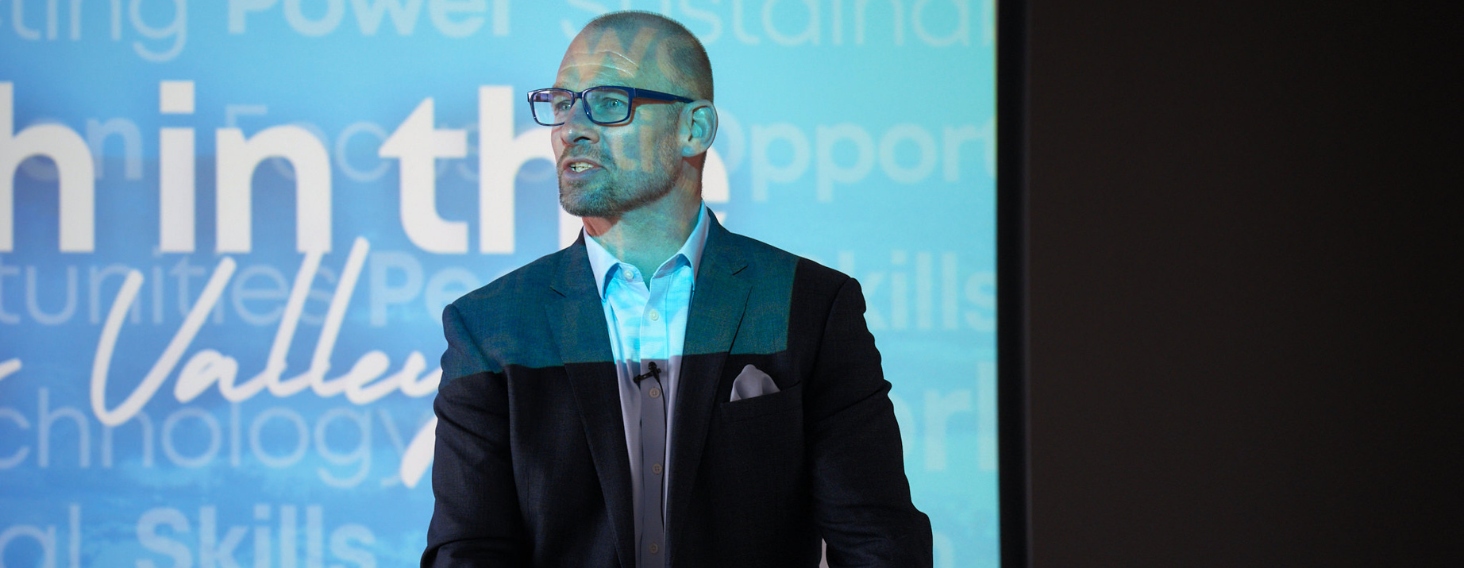
Last Tuesday we gathered in Reading for our Thames Valley Growth Conference. This year we were hosted by Becton Dickinson (BD), a UK subsidiary of one of the many global businesses that have chosen the Thames Valley as the location to fulfil their ambitions.
Maxwell Wilber Becton, the American founder of BD, was an enlightened industrialist, and was also President of Bergen County Chamber of Commerce in New Jersey in 1898, the same year that BD acquired patent rights for an all-glass syringe, marking a huge step in medical-device innovation. Maxwell Becton knew how to innovate and grow a business, as well as how to play a civic role to get stuff done and it’s with that can do attitude that we approached the Conference on a day where local, national and international events would provide yet another opportunity for distraction and uncertainty.
It was a fitting place to focus on one of the most important questions facing us – how do we grow as an economy and as businesses, how do we grow when the growing gets tough?
For many of the businesses attending, the message was clear that it is tough out there and some of the obligations placed on business by Government since our previous conference at Syngenta a year ago are proving counterproductive, denting confidence and the UKs competitiveness. So it is of little surprise to me that much of the narrative for the Conference was how to find optimism in our bones.
The UKs competitiveness catches a cold and the Thames Valley sneezes.
The recent appointment of heavyweight economist Andy Haldane CBE to the role of President of the British Chambers of Commerce was a huge win for the voice of business and accepting the invitation as keynote at the Thames Valley Growth Conference highlighted the appetite to hear from business. The words of attendees will have been front of mind to articulate the SoS for Business & Trade Peter Kyle MP at the influential BCC Business Council the morning after the Conference.
Haldane articulated the fuel in the tank and fixable problems to unlock the balance sheet of business and UK plc through domestic pension funds and spoke passionately about the opportunities that could be unlocked through greater local collaboration, smarter investment and devolution.
There is ‘fuel in the tank!’
Robert Van de Noort CBE articulated how pursuing a more joined up pan-Thames Valley regional approach to civic leadership is a goal worth pursuing. Making plans for growth through greater collaboration and regional leadership at a time of political change may feel audacious, but it will bring more economic prosperity and success not only to our region but also the whole of the UK.
Speakers stressed the importance of committing to longer-term strategic plans and the value of the connections with devolved regions. I was delighted that Charlotte Horobin, CEO of Cambridgeshire Chamber of Commerce could join us and share her lessons from her community’s growth plans, which cut across traditional local public sector boundaries to better reflect supply chains and the scale needed to get noticed nationally and internationally. Ensuring the ‘Devolution Dividend’ reaches all corners of the business community from entrepreneurs to multinationals, is what motivates her.
On skills and the role of business, it felt like there was a notable shift since the 2025 Growth Conference to a more vocal articulation of the shared responsibility between industry and education for skills development across the Thames Valley. The Local Skills Improvement Plans have done a great job in effectively shining a light on the benefits to both the education system and the interests of ‘enlightened’ employers who dedicate time and energy to investing in their future and current workforce, and yet investment in skills is woefully low in the UK (the Thames Valley region is unfortunately no exception) when compared to other western economies.
As a regional Chamber we left motivated to work even harder with the British Chambers of Commerce to pursue changes in policy from Government to incentivise this enlightened approach of investing in the next generation.
Any growth requires leadership, and there are new opportunities on the horizon for that, by way of devolution and the recognition that working at scale helps in an increasingly global and competitive world.
Businesses tell us that the Chamber has an important role to play in our region’s future and one of the best interventions we can make through uncertainty is by connecting people and planning a way forward.
Reflecting on the Conference, here are five pledges we will take forward, and will help move conversation into action.
- Make the case to move at pace with Thames Valley Devolution, with a top-down Thames Valley plan and compelling narrative which provides additionality across all stakeholders. This will now involve building relations with the new Minister for Devolution.
- Equip SMEs with the tools and skills they need to adopt AI effectively through programmes such as BCC Pair AI and Skills England initiatives.
- Get major infrastructure projects over the line which unlock economic growth such as the Western Rail Link to Heathrow scheme. The next TVCC action phase two of the economic case is backed by local Authorities and business.
- Work in partnership with Thames Valley HE, FE, and learning providers to implement the findings for co-developed curriculum change and employer commitments from the LSIP across Berkshire and Oxfordshire.
- Use the Chambers reach locally, nationally, and globally to grow the number and scale of exporters, building on existing training and skilling programmes.
A huge thank you to all the Conference speakers and sponsors (Becton Dickinson and the University of Reading). I look forward to reflecting on how far we have moved the dial at next years Conference.